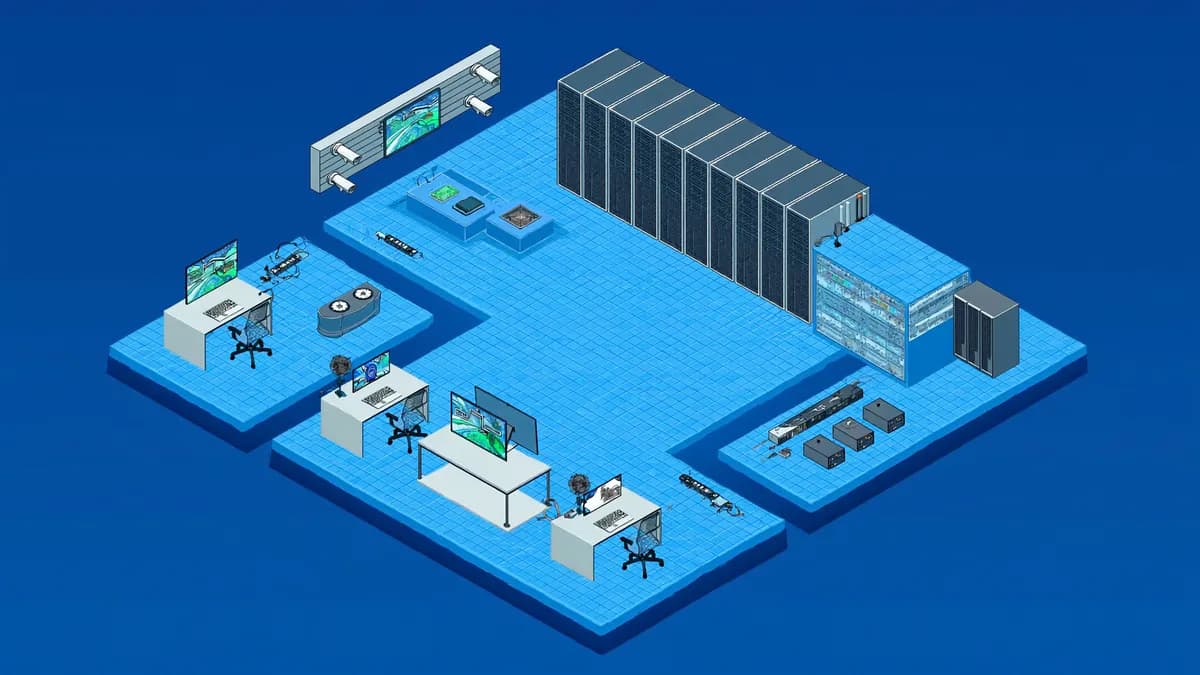
Virtualized Radio Access Network (vRAN) represents a fundamental shift in how mobile operators deploy 5G infrastructure. Rather than relying on proprietary hardware-centric systems, vRAN runs on commercial off-the-shelf (COTS) servers, offering flexibility and reduced vendor lock-in. However, the industry has discovered that technology maturity is no longer the limiting factor. Instead, mobile operators face a complex set of economic, operational, and scalability challenges that will determine whether vRAN economics support widespread adoption and whether vRAN becomes the dominant architecture for next-generation networks.
The transition to open and virtualized RAN architectures is accelerating globally, with Japan leading the charge through Rakuten Mobile's fully virtualized O-RAN network—currently the world's largest deployment of its kind. Yet even as technology proves itself in production environments, operators grapple with energy costs, resource optimization in edge environments, automation complexity, and long-term growth planning. Understanding these challenges and the solutions emerging to address them is critical for telecom professionals evaluating their network evolution strategies.
Understanding vRAN: From Technology to Economics
vRAN fundamentally decouples software from hardware, allowing radio access network functions to run on standardized servers rather than proprietary appliances. This architectural shift enables multiple vendors to contribute components, fostering innovation and competition. The O-RAN Alliance ha

The benefits of vRAN economics are substantial. vRAN provides unprecedented flexibility in network deployment, allowing operators to scale capacity by adding commodity servers rather than specialized hardware. It reduces vendor lock-in, enabling operators to switch suppliers or integrate best-of-breed solutions. Cloud-native deployment models enable faster innovation cycles and more efficient resource utilization. For operators managing multiple generations of network technology simultaneously, vRAN offers a path to consolidate infrastructure and reduce operational complexity.
However, the industry has reached a critical realization: technology readiness is no longer the primary constraint. The real challenges affecting vRAN economics are economic, operational, and strategic. Research indicates that deployment costs, energy consumption, and operational complexity represent the primary barriers to vRAN adoption, not technological limitations.
The Real Barriers to vRAN Adoption
Mobile operators moving toward open and virtualized RAN architectures are finding that the main challenges impacting vRAN economics are capital investment, resource utilization in constrained environments, automation requirements, and long-term growth planning rather than technology readiness. This represents a fundamental shift in how the industry thinks about vRAN deployment decisions.
Economic challenges dominate operator concerns regarding vRAN economics. Deploying vRAN requires significant capital investment in new infrastructure, training, and integration. Energy costs represent a substantial ongoing operational expense, particularly as 5G traffic continues to grow. Operators must justify these investments against their existing infrastructure and demonstrate clear return on investment over multi-year deployment cycles. Industry experts note that vRAN economics directly influence deployment timelines and vendor selection.
Resource optimization in edge environments presents another critical challenge. vRAN deployments often occur at network edges where physical space, power availability, and cooling capacity are constrained. Unlike centralized data centers with abundant resources, edge deployments require careful optimization of compute, memory, and I/O resources to maintain performance while minimizing physical footprint and power consumption.
Automation and operational complexity round out the major barriers. vRAN architectures are cloud-native by design, requiring operators to adopt new operational models, automation frameworks, and management tools. This represents a significant departure from traditional RAN operations and requires substantial organizational change and training.
Energy Costs and Resource Optimization
Energy consumption directly impacts vRAN economics and operational profitability. Processing radio signals—particularly Layer 1 functions like LDPC (Low-Density Parity-Check) decoding for 5G—demands significant computational resources. As 5G traffic grows and operators add capacity, energy costs escalate proportionally, making processor efficiency a critical economic factor.
Resource optimization becomes critical in edge deployments where vRAN economics are most sensitive to efficiency gains. Unlike centralized data centers, edge nodes operate under strict constraints. Physical space is limited, power budgets are fixed, and cooling capacity is finite. Operators must maximize throughput and efficiency within these constraints, making processor selection a critical economic decision that directly affects vRAN economics over the deployment lifecycle.
This is where processor architecture matters significantly for vRAN economics. General-purpose server CPUs must be optimized for the specific workloads that vRAN imposes. Layer 1 processing, which handles signal encoding and decoding, is particularly demanding. Processors that excel at these specific tasks can deliver higher throughput with lower power consumption, directly improving vRAN economics and reducing total cost of ownership.
Automation and Cloud-Native Operations
Cloud-native RAN places new demands on compute platforms, particularly around determinism, efficiency, and integration flexibility. According to Michael Begley, Head of RAN Compute & Platform at Ericsson, "Cloud-native RAN places new demands on compute platforms, particularly around determinism, efficiency, and integration flexibility. Collaboration across the ecosystem, including with AMD, is key to supporting operators as these architectures mature." [Source: Storage Review]
Traditional RAN operations relied on dedicated hardware with predictable, deterministic behavior. vRAN must achieve similar determinism while running on shared, virtualized infrastructure. This architectural shift requires careful optimization of compute platforms to ensure consistent performance and reliability.
Automation is essential for managing the complexity of virtualized environments and controlling vRAN economics at scale. Manual configuration and troubleshooting become impractical at scale. Operators need sophisticated automation frameworks that can provision resources, manage workloads, and respond to failures automatically. This requires not just tools, but a fundamental shift in operational culture and processes.
Collaboration across the ecosystem is key to supporting operators as these architectures mature. Equipment vendors, software providers, and processor manufacturers must work together to ensure that components integrate seamlessly and that automation frameworks can manage the entire stack effectively.
AMD EPYC 8005: Addressing vRAN Economics
AMD's EPYC 8005 'Sorano' series CPUs, built on the Zen 5 architecture, directly address the economic challenges that dominate vRAN economics and deployment decisions. These processors are specifically optimized for the computational demands of virtualized radio access networks.
The key innovation lies in optimized Layer 1 processing for improved vRAN economics. LDPC decoding—a critical function in 5G signal processing—is computationally intensive. AMD EPYC 8005 processors include architectural enhancements that accelerate LDPC decoding, delivering lower latency and higher 5G uplink throughput. This translates directly to improved network performance and reduced power consumption per unit of throughput, directly improving vRAN economics.
By integrating AMD's latest processor with Samsung's commercially-proven vRAN software, vendors are breaking new ground in network efficiency and vRAN economics. Keunchul Hwang, Executive Vice President and Head of Technology Strategy Group at Samsung Electronics, stated: "By integrating AMD latest processor with Samsung's commercially-proven vRAN software, we are breaking new ground in network efficiency." [Source: Storage Review] This collaboration demonstrates the ecosystem approach necessary for successful vRAN deployments. Processor optimization alone is insufficient; it must be paired with software that can fully leverage the hardware capabilities.
Paul Miller, CTO at Wind River, emphasizes the broader challenge: "Operators are under pressure to scale Open RAN and edge AI while maintaining strict control over cost, power, and operational complexity." [Source: Storage Review] AMD EPYC 8005 processors address this pressure by delivering the compute density and efficiency necessary for economically viable edge deployments. Higher performance per watt means lower energy bills, smaller physical footprints, and reduced cooling requirements—all critical factors in edge economics.
Global vRAN Deployments and Market Growth
Japan has emerged as the global leader in O-RAN deployment and vRAN economics implementation. Rakuten Mobile operates the world's largest fully virtualized O-RAN network, demonstrating that the technology works at commercial scale. KDDI and SoftBank are advancing their own deployments, though integration challenges remain a significant hurdle. [Source: RCR Wireless]
The global open vRAN market is experiencing robust growth, with a compound annual growth rate exceeding previous forecasts for the 2025-2033 period. This growth is driven by multiple factors: increasing 5G demand, the shift toward cloud-native architectures, reduced vendor lock-in benefits, and integration of AI and machine learning capabilities into network operations. [Source: Data Insights Market Report]
However, growth is not uniform across regions and operators. Integration challenges persist across deployments. Operators must carefully manage the complexity of integrating components from multiple vendors, ensuring interoperability and maintaining service quality. These challenges are primarily operational and organizational rather than technical, but they significantly impact deployment timelines and costs.
The competitive landscape is evolving as vendors pursue different optimization strategies. While vRAN represents the dominant architectural direction, alternative approaches are emerging. Nokia's partnership with NVIDIA for GPU-based RAN processing represents a different optimization strategy. However, operators question whether the higher power draw and unclear economics of GPU-based approaches justify the investment compared to CPU-optimized vRAN solutions.
Key Takeaways
- vRAN Economics Drive Decisions: Technology maturity is no longer the limiting factor—economic challenges, energy costs, and operational complexity dominate deployment decisions.
- Energy Efficiency Matters: Processor selection directly impacts vRAN economics over multi-year deployments, with optimized CPUs reducing power consumption and operational costs.
- Edge Deployment Constraints: Resource optimization in constrained edge environments is critical to achieving viable vRAN economics.
- Automation is Essential: Cloud-native operations require sophisticated automation frameworks to manage complexity and control costs at scale.
- Ecosystem Collaboration: Successful vRAN deployments require close integration between processors, software, and operational tools.
- Market Growth Accelerating: Global vRAN adoption is accelerating, driven by 5G demand and cloud-native architecture benefits.
- Processor Optimization: AMD EPYC 8005 and similar optimized processors directly address the economic challenges that dominate vRAN deployment decisions.
Frequently Asked Questions
What is vRAN and how does it differ from traditional RAN?
vRAN (Virtualized Radio Access Network) decouples software from hardware, running network functions on commercial off-the-shelf servers instead of proprietary appliances. This provides flexibility, reduces vendor lock-in, and enables cloud-native operations compared to traditional hardware-centric RAN architectures.
What are the main economic challenges in vRAN deployment?
The primary economic challenges include significant capital investment in new infrastructure, substantial energy costs for signal processing, resource optimization in constrained edge environments, and the need for new automation frameworks and operational training.
How does processor selection impact vRAN economics?
Processor selection directly affects vRAN economics by determining power consumption, throughput, and operational costs over the deployment lifecycle. Optimized processors like AMD EPYC 8005 deliver higher performance per watt, reducing energy bills and improving overall ROI.
Why is automation important for vRAN operations?
Automation is essential for managing the complexity of virtualized environments at scale. It enables automatic resource provisioning, workload management, and failure response, reducing operational costs and improving service reliability.
What is the current state of global vRAN adoption?
Japan leads global vRAN adoption with Rakuten Mobile operating the world's largest fully virtualized O-RAN network. The global market is experiencing robust growth, though integration challenges and operational complexity remain significant hurdles for operators.
How does vRAN economics compare to traditional RAN over time?
While vRAN requires higher initial capital investment, improved energy efficiency and operational automation can deliver better long-term economics. Operators must carefully evaluate multi-year ROI, considering energy costs, staffing requirements, and infrastructure flexibility.
What role does the O-RAN Alliance play in vRAN economics?
The O-RAN Alliance establishes open specifications that enable vendor interoperability and competition, reducing vendor lock-in and supporting better vRAN economics through component choice flexibility and innovation acceleration.
The Path Forward for Mobile Operators
Mobile operators evaluating vRAN deployment should focus on the economic fundamentals that drive vRAN economics. Technology readiness is no longer a differentiator—multiple vendors offer mature, production-ready solutions. The competitive advantage lies in optimizing deployment economics: minimizing energy costs, maximizing resource efficiency, automating operations, and planning for long-term growth.
Processor selection matters more than many operators initially realize when evaluating vRAN economics. Choosing CPUs optimized for vRAN workloads can significantly impact operational costs over the multi-year life of a deployment. AMD EPYC 8005 processors represent a significant step forward in this optimization, delivering the compute density and efficiency necessary for economically viable vRAN deployments.
Operators should also prioritize ecosystem partnerships when considering vRAN economics. Successful vRAN deployments require close collaboration between operators, software vendors, hardware manufacturers, and systems integrators. Choosing partners with proven integration experience and demonstrated commitment to vRAN economics is critical.
Automation and operational readiness deserve significant attention in vRAN economics planning. The technical challenges of vRAN are largely solved. The remaining challenges are organizational and operational. Operators must invest in training, tools, and process redesign to effectively manage virtualized RAN infrastructure at scale.
Finally, operators should monitor market developments closely as they evaluate vRAN economics. The vRAN landscape is evolving rapidly, with new vendors entering the market, existing players expanding their offerings, and integration approaches maturing. Staying informed about these developments helps operators make better decisions about timing, vendor selection, and deployment strategies.
Conclusion
The shift to virtualized RAN architectures represents a fundamental transformation in how mobile networks are built and operated. While technology maturity is no longer a barrier, economic and operational challenges dominate deployment decisions. Mobile operators must focus on optimizing vRAN economics: minimizing energy costs, maximizing resource efficiency, automating operations, and planning for sustainable long-term growth.
AMD EPYC 8005 processors address these economic challenges through optimized Layer 1 processing and improved energy efficiency. Combined with mature software solutions and proven deployment approaches, these processors enable operators to build economically viable vRAN networks that deliver superior performance and flexibility.
As the global vRAN market continues its rapid growth, operators who successfully navigate the economic and operational challenges will gain significant competitive advantages. Those who focus narrowly on technology while neglecting vRAN economics will struggle to justify their investments and achieve the benefits that vRAN promises.
Sources
- Advancing vRAN Economics with AMD EPYC 8005 Server CPUs
- Regional Trends and Opportunities for Open vRAN Market
- Omdia: Japan advances O-RAN, uneven vRAN scale
- Confessions: The Real Telco Trends to Watch in 2026
- Advancing vRAN Economics with AMD EPYC 8005 Server CPUs
- Telecoms in 2026: Will Opportunities Outweigh the Challenges
- Major Telecoms Trends for 2026
- 2026 Trends in 5G and 6G: What a Year of Testing Reveals