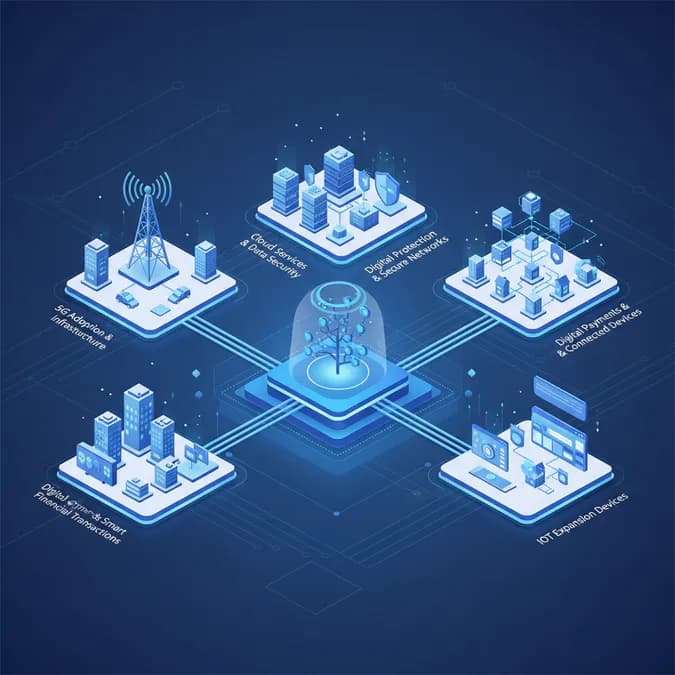
The Indian telecom sector has achieved a significant milestone, with telecom service providers (TSPs) collectively generating gross revenue exceeding ₹1 lakh crore during the quarter ended December 2023. This landmark figure underscores the robust growth trajectory of the industry, driven by increasing data consumption, the ongoing rollout of 5G services, and a growing subscriber base. The adjusted gross revenue (AGR) for the sector also witnessed a substantial increase, reflecting the improved financial health of the TSPs. This impressive growth in telecom revenue highlights the critical role of the telecom sector in India's economic growth and digital transformation.
As the backbone of the digital economy, the telecom industry facilitates communication, commerce, and access to information for millions of Indians. The achievement of this revenue milestone demonstrates the resilience and dynamism of the sector in the face of evolving market dynamics and technological advancements.
Key Takeaways

- Gross Revenue Milestone: Telecom service providers' gross revenue surpassed ₹1 lakh crore in the December 2023 quarter.
- AGR Growth: Adjusted Gross Revenue (AGR) increased by 8.13% year-on-year, reaching ₹84,270 crore.
- Market Leaders: Reliance Jio continues to lead in revenue, followed by Bharti Airtel and Vodafone Idea.
- Government Collections: The increase in AGR is expected to boost government revenue through license fees and spectrum usage charges.
- Growth Drivers: Increased data consumption, 5G adoption, and a growing subscriber base are driving revenue growth.
Diving Deeper into the Telecom Revenue Surge
The ₹1 lakh crore revenue milestone represents a significant achievement for the Indian telecom sector. Several factors contributed to this impressive performance, including:
Increased Data Consumption
The proliferation of smartphones and the increasing adoption of digital services have led to a surge in data consumption across the country. With more and more people

5G Rollout and Adoption
The ongoing rollout of 5G services is another key factor contributing to the revenue growth of the telecom sector. 5G technology offers significantly faster speeds and lower latency compared to previous generations, enabling new and innovative applications such as augmented reality, virtual reality, and the Internet of Things (IoT). As more consumers and businesses adopt 5G-enabled devices and services, telecom operators are seeing a boost in revenue.
Growing Subscriber Base
India's telecom subscriber base continues to grow, driven by increasing mobile penetration in rural areas and the rising demand for connectivity. As more people gain access to mobile services, telecom operators are able to expand their revenue base and increase their overall profitability. The government's efforts to promote digital inclusion and bridge the digital divide are also contributing to the growth of the subscriber base.
Adjusted Gross Revenue (AGR) Growth
In addition to the surge in gross revenue, the telecom sector also witnessed a significant increase in adjusted gross revenue (AGR) during the December quarter. AGR is a key metric used by the government to calculate license fees and spectrum usage charges payable by telecom operators. The 8.13% year-on-year increase in AGR to ₹84,270 crore indicates improved financial performance and profitability of the TSPs.
The growth in AGR is driven by a combination of factors, including increased revenue from data services, improved operational efficiency, and the implementation of cost-optimization measures. The government's efforts to provide regulatory clarity and create a conducive business environment have also contributed to the positive performance of the telecom sector.
Market Share and Competition
The Indian telecom market is characterized by intense competition among a few major players. Reliance Jio continues to lead the market in terms of revenue and subscriber base, followed by Bharti Airtel and Vodafone Idea. These three operators account for the vast majority of the market share, with smaller players struggling to compete.
The intense competition in the market has led to price wars and margin compression, putting pressure on the profitability of telecom operators. However, it has also benefited consumers by driving down prices and increasing access to affordable mobile services. The ongoing consolidation in the telecom sector is expected to further intensify competition and reshape the market landscape.
Government Collections and Impact
The increase in AGR is expected to boost government revenue through license fees and spectrum usage charges. These revenues are crucial for funding various government programs and initiatives, including infrastructure development, social welfare schemes, and digital inclusion programs. The telecom sector plays a vital role in contributing to the government's revenue base and supporting its development agenda.
Challenges and Opportunities
While the Indian telecom sector has achieved significant progress in recent years, it still faces several challenges, including:
- High Debt Levels: Many telecom operators are burdened with high levels of debt, which limits their ability to invest in infrastructure and innovation.
- Spectrum Availability: The availability of spectrum is a critical factor for the growth of the telecom sector. The government needs to ensure that sufficient spectrum is available at affordable prices.
- Regulatory Uncertainty: Regulatory uncertainty can create challenges for telecom operators and hinder investment in the sector. The government needs to provide a stable and predictable regulatory environment.
Despite these challenges, the Indian telecom sector also has significant opportunities for growth, including:
- Digital Transformation: The ongoing digital transformation of the Indian economy is creating new opportunities for telecom operators to provide innovative services and solutions.
- Internet of Things (IoT): The growth of the IoT market is expected to drive demand for connectivity and create new revenue streams for telecom operators.
- Rural Connectivity: The government's focus on improving rural connectivity is creating opportunities for telecom operators to expand their reach and serve underserved communities.
The Bottom Line
The Indian telecom sector has achieved a significant milestone with gross revenue exceeding ₹1 lakh crore in the December quarter. This achievement underscores the robust growth trajectory of the industry and its critical role in India's economic development. While the sector faces challenges, it also has significant opportunities for growth and innovation. The government's support and a conducive regulatory environment will be crucial for unlocking the full potential of the Indian telecom sector.
Frequently Asked Questions (FAQ)
- What is telecom revenue? Telecom revenue refers to the total income generated by telecom service providers from their services, including voice, data, and value-added services.
- How does 5G impact telecom revenue? The rollout of 5G technology enhances data speeds and connectivity, leading to increased data consumption and higher revenue for telecom operators.
- What drives growth in the telecom sector? Key drivers include increased data consumption, 5G adoption, and the expansion of the subscriber base, particularly in rural areas.
Table of Contents
- Key Takeaways
- Diving Deeper into the Telecom Revenue Surge
- Increased Data Consumption
- 5G Rollout and Adoption
- Growing Subscriber Base
- Adjusted Gross Revenue (AGR) Growth
- Market Share and Competition
- Government Collections and Impact
- Challenges and Opportunities
- The Bottom Line
- Frequently Asked Questions (FAQ)