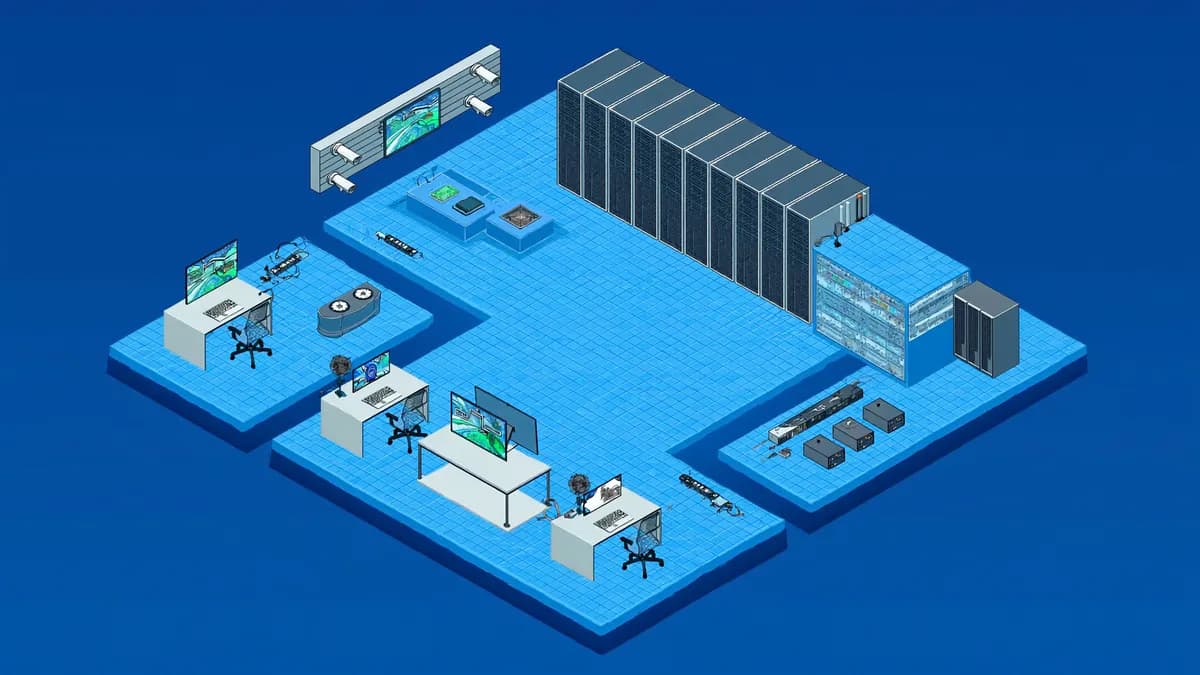
Nvidia AI Grid telecom is fundamentally reshaping how telecommunications operators deploy artificial intelligence across their networks. Building on its successful AI-RAN (Artificial Intelligence Radio Access Network) initiatives, the company has introduced a comprehensive AI Grid architecture designed to turn distributed telecom infrastructure into active AI computing fabrics. This strategic expansion represents a significant shift in how carriers can monetize their existing assets while delivering real-time AI services to hundreds of millions of users.
The AI Grid transforms telecom operators' geographically dispersed network sites—including edge data centers, central offices, and fiber network endpoints—into unified AI inference platforms. Rather than centralizing AI workloads in distant cloud data centers, this distributed approach places intelligence where data originates and where users connect, dramatically reducing latency while optimizing costs. Major carriers including Spectrum, T-Mobile, and Comcast are actively testing and deploying these grids, partnering with infrastructure providers like HPE and Cisco to implement Nvidia's reference architecture.
What makes this initiative particularly significant is the scale of opportunity it unlocks. Telecom operators globally manage over 100,000 distributed network data centers—a vast infrastructure asset that has traditionally served only connectivity functions. Nvidia's AI Grid architecture enables these sites to simultaneously deliver network services and run AI inference workloads, potentially unlocking approximately 100 gigawatts of new AI computing capacity from existing telco infrastructure over time. Research indicates that this transformation could lead to significant advancements in operational efficiency and service delivery.
Understanding this transformation requires examining how Nvidia AI Grid telecom differs from previous approaches, how operators are implementing it, and what implications it holds for the broader telecommunications industry.
AI-RAN: The Foundation for Network Intelligence
Before introducing AI Grid, Nvidia established its foothold in telecom through AI-RAN technology, which embeds artificial intelligence directly into radio access networks. AI-RAN enhances 5G performance by optimizing network functions like radio resource management, traffic steering, and beam selection in real time. This approach proved the viability of runni

However, AI-RAN focused specifically on radio access network optimization. While valuable, this represented a narrow application of AI's potential within telecom infrastructure. Operators recognized that AI could address far broader use cases—from real-time media rendering and smart-city analytics to autonomous network management and agentic AI applications that make decisions without human intervention.
This realization prompted Nvidia to expand its vision beyond AI-RAN into a more comprehensive architecture capable of supporting diverse AI workloads across the entire network infrastructure. The evolution from AI-RAN to AI Grid reflects the industry's growing recognition that AI's value extends far beyond traditional network optimization functions.
Introducing the AI Grid Architecture
Nvidia's AI Grid represents a fundamental rethinking of how distributed AI infrastructure should be organized. Rather than treating edge sites, regional data centers, and centralized cloud facilities as separate computing domains, AI Grid unifies them into a cohesive system that intelligently places AI workloads where they execute most efficiently.
As Chris Penrose, Global Vice President for Telco at Nvidia, explains: "An AI Grid unifies geographically distributed AI clusters to place AI workloads where they run best—balancing performance, cost, and latency across AI factories, regional sites, and the edge." This orchestration capability is essential because different AI applications have different requirements. Some tasks benefit from centralized processing with access to massive datasets, while others demand sub-millisecond latency that only edge execution can provide.
The architecture leverages Nvidia's GPU technology, including the RTX PRO 6000 Blackwell processors, combined with specialized networking hardware like Spectrum-X Ethernet and BlueField Data Processing Units (DPUs). These components work together to create a high-performance, low-latency infrastructure capable of supporting demanding AI applications at scale.
Spectrum-X Ethernet delivers particular value for AI workloads, providing 50% acceleration in storage performance compared to conventional networking solutions. This optimization proves critical when moving large AI models and inference data across distributed network sites, enabling faster model loading and more responsive inference execution.
Nvidia AI Grid Telecom: Key Architectural Components
- Distributed GPU Infrastructure: RTX PRO 6000 Blackwell GPUs deployed across edge sites, regional data centers, and central offices
- Specialized Networking: Spectrum-X Ethernet for optimized AI data movement and BlueField DPUs for intelligent data processing
- Orchestration Software: Intelligent workload placement algorithms that route AI jobs to optimal execution locations
- Unified Management: Centralized control plane for monitoring, managing, and optimizing distributed AI resources
Operator Deployments and Real-World Performance
The theoretical benefits of Nvidia AI Grid architecture have been validated through real-world deployments by major telecom operators. Spectrum, the broadband and video division of Charter Communications, has emerged as a leading implementer of this technology.
Spectrum's deployment demonstrates the practical viability of AI Grid at significant scale. The operator has deployed Nvidia AI Grid infrastructure across more than 1,000 edge data centers integrated throughout its fiber network. This distributed deployment reaches approximately 500 million devices while maintaining latency below 10 milliseconds—a performance threshold critical for real-time AI applications like interactive media rendering and instantaneous network optimization. This sub-10-millisecond latency from edge locations represents a dramatic improvement over traditional cloud-based AI inference, which typically introduces 50-200 milliseconds of latency due to the distance data must travel. For applications requiring real-time responsiveness, this difference proves transformative. Users experience noticeably faster interactions, and network management systems can respond to changing conditions with unprecedented speed.
T-Mobile has taken a complementary approach, piloting edge AI capabilities using Nvidia RTX PRO 6000 Blackwell GPUs. The carrier is exploring applications beyond traditional AI-RAN optimization, including smart-city analytics and other AI-native network functions. These pilots validate that operators can run diverse AI workloads on the same infrastructure, maximizing return on investment.
Comcast, another major North American operator, has also begun implementing AI Grid technology, recognizing the competitive advantage that distributed AI infrastructure provides. These early adopters are establishing best practices and demonstrating viability that will accelerate broader industry adoption.
Performance Metrics from Spectrum Deployment
- Latency: Less than 10 milliseconds to 500 million devices
- Scale: 1,000+ edge data centers across fiber network
- Coverage: Nationwide deployment across Spectrum service areas
- GPU Technology: RTX PRO 6000 Blackwell processors
Partnership Ecosystem and Reference Architecture
Nvidia's success in deploying AI Grid across telecom networks depends heavily on partnerships with established infrastructure vendors who understand operator requirements and have existing relationships with carriers.
Hewlett Packard Enterprise (HPE) has launched a comprehensive AI Grid solution aligned with Nvidia's reference architecture. HPE's offering combines its expertise in distributed computing infrastructure with Nvidia's AI capabilities, providing operators with an integrated solution that simplifies deployment and management. Rami Rahim, Executive Vice President and General Manager of Networking at HPE, emphasizes the strategic importance of this partnership: "We're redefining how AI is delivered by moving intelligence to where data and users live and making the network the dependable fabric for real-time experiences."
Cisco has similarly developed an AI Grid reference architecture in partnership with Nvidia, focusing on edge inferencing capabilities. Cisco's involvement is particularly significant given its dominant position in telecom networking equipment and its established relationships with operators worldwide. The company's participation validates AI Grid as a mainstream architectural approach rather than a niche technology.
These partnerships extend Nvidia's reach beyond its core GPU business into complete system solutions that operators can deploy with confidence. Rather than requiring operators to integrate disparate components from multiple vendors, these partnerships provide tested, validated configurations that reduce deployment risk and accelerate time-to-value.
Partner Contributions to AI Grid Ecosystem
- HPE: Full-stack AI Grid solutions, distributed infrastructure expertise, and operator relationships
- Cisco: Edge inferencing architecture, networking equipment integration, and service provider partnerships
- Nvidia: GPU technology, AI software stack, and reference architecture definition
Technical Capabilities and Performance Characteristics
The AI Grid architecture delivers several technical advantages that make it particularly suited to telecom operator requirements. The distributed nature of the system means that AI inference happens close to where data originates and where users connect, minimizing the latency that would result from sending data to distant cloud facilities.
This proximity advantage proves especially valuable for latency-sensitive applications. Real-time media rendering, for example, requires sub-100-millisecond response times to maintain user experience quality. Smart-city applications that process sensor data from thousands of distributed locations benefit from processing that data locally rather than aggregating it centrally. Network optimization functions that must respond to changing conditions in real time cannot tolerate the delays inherent in cloud-based processing.
Beyond latency, the distributed architecture offers cost advantages. Processing data at the edge eliminates the bandwidth costs associated with transmitting raw data to centralized facilities. It also reduces the computational burden on central cloud infrastructure, allowing operators to serve more users with existing resources.
The architecture also enables operators to implement AI-native network functions that were previously impossible. These include advanced RAN optimization that adapts in real time to changing radio conditions, intelligent traffic steering that routes data through optimal network paths based on current conditions, and autonomous network management systems that detect and respond to anomalies without human intervention.
AI-Native Network Functions Enabled by AI Grid
- Real-Time RAN Optimization: Continuous adjustment of radio parameters based on network conditions
- Intelligent Traffic Steering: Dynamic routing decisions that optimize network performance
- Anomaly Detection: Autonomous identification and response to network issues
- Predictive Maintenance: AI-driven forecasting of equipment failures before they occur
- Smart-City Analytics: Real-time processing of distributed sensor data for urban applications
Market Impact and Industry Implications
Nvidia's AI Grid initiative carries profound implications for the telecommunications industry. Historically, telecom operators have viewed their infrastructure primarily as a connectivity delivery mechanism. Revenue came from selling bandwidth and connectivity services, with limited ability to capture value from the computational assets embedded in their networks.
AI Grid fundamentally changes this equation. By transforming network infrastructure into active AI computing platforms, operators gain the ability to offer new services and capture new revenue streams. They can provide AI inference capabilities to enterprises, content providers, and application developers who need low-latency AI processing. They can optimize their own network operations through AI-driven management. They can enable entirely new categories of applications that depend on distributed, low-latency AI execution.
This transformation also affects the competitive dynamics within the telecom industry. Operators with early-stage AI Grid deployments gain competitive advantages in attracting customers who require AI capabilities. They can differentiate their offerings based on the performance and capabilities their AI infrastructure enables. This creates incentives for rapid adoption across the industry.
The initiative also has implications for the broader AI infrastructure market. Rather than concentrating AI computing in hyperscale cloud data centers operated by companies like Amazon, Google, and Microsoft, AI Grid distributes AI computing across telecom infrastructure. This creates a more diverse AI infrastructure ecosystem and potentially reduces the dominance of hyperscale cloud providers in AI services delivery.
Strategic Implications for Telecom Operators
- New Revenue Streams: Monetization of AI inference capabilities to third parties
- Operational Efficiency: AI-driven network optimization reducing operational costs
- Competitive Differentiation: Unique capabilities unavailable from competitors
- Asset Utilization: Increased value extraction from existing network infrastructure
- Customer Retention: Enhanced services attracting and retaining enterprise customers
Future Roadmap and Expansion Opportunities
The current deployments by Spectrum, T-Mobile, and Comcast represent early stages of a broader transformation. As operators gain experience with AI Grid deployments, they will likely expand the scope and scale of their implementations. Additional operators worldwide will evaluate and deploy similar infrastructure, recognizing the competitive and revenue-generation opportunities it provides.
The 100 gigawatts of potential AI computing capacity embedded in global telecom infrastructure represents an enormous opportunity. Realizing this potential requires continued innovation in several areas: improving the orchestration software that intelligently places workloads across distributed sites, developing new AI applications optimized for edge execution, and creating business models that allow operators to monetize their AI infrastructure effectively.
Nvidia's continued investment in telecom partnerships and technology development suggests the company views this market as strategically important for its long-term growth. As AI becomes increasingly central to telecommunications operations and services, the company's position as the primary GPU supplier for telecom AI infrastructure provides significant competitive advantages.
International operators in Europe, Asia, and other regions will likely follow North American carriers in deploying AI Grid infrastructure. This global expansion will create opportunities for Nvidia, its partners, and operators to establish themselves as leaders in AI-enabled telecommunications.
Key Areas for Future Development
- Orchestration Intelligence: More sophisticated algorithms for optimal workload placement
- Application Ecosystem: Development of AI applications specifically designed for edge execution
- Business Models: New pricing and service models for AI infrastructure monetization
- International Expansion: Deployment across global telecom operators
- Integration: Seamless integration with existing network management systems
The Bottom Line
Nvidia's AI Grid architecture represents a significant evolution in how artificial intelligence integrates into telecommunications networks. By transforming distributed telecom infrastructure into unified AI computing platforms, the technology enables operators to deliver low-latency AI services while optimizing their network operations. Early deployments by major carriers like Spectrum, T-Mobile, and Comcast validate the approach's viability and performance characteristics.
The partnerships with infrastructure vendors like HPE and Cisco extend Nvidia's reach and accelerate industry adoption. As more operators recognize the competitive and revenue-generation opportunities AI Grid provides, the technology is likely to become a standard component of modern telecom infrastructure. This transformation positions telecommunications networks not merely as connectivity conduits but as active AI computing fabrics capable of supporting the next generation of intelligent applications and services. For operators, investors, and technology providers, AI Grid represents a pivotal shift in how telecommunications infrastructure creates value in an AI-driven world.
Frequently Asked Questions
- What is Nvidia AI Grid telecom? Nvidia AI Grid telecom refers to the architecture that transforms telecom infrastructure into distributed AI computing platforms, enhancing performance and enabling new services.
- How does AI Grid improve telecom networks? AI Grid reduces latency, optimizes costs, and allows operators to run diverse AI workloads closer to users, improving overall network efficiency.
- What companies are using Nvidia AI Grid? Major telecom operators like Spectrum, T-Mobile, and Comcast are deploying Nvidia AI Grid technology to enhance their networks.
Sources
- Automated Pipeline
- Spectrum Deploys AI Infrastructure at the Network Edge Using NVIDIA AI Grid
- NVIDIA, Telecom Leaders Build AI Grids to Optimize Inference on Distributed Networks
- Cisco's Nvidia-powered AI Grid could be a turning point for telcos
- AI Grids for Distributed AI Infrastructure - NVIDIA
- Source: developer.nvidia.com
- Source: blogs.cisco.com
- Source: resources.nvidia.com