The Digital Divide Challenge

In an increasingly digital world, the ability to access technology is paramount. Handset affordability has emerged as a significant barrier to achieving global digital inclusion, particularly in developing nations. As highlighted by Union Minister Jyotiraditya Scindia, addressing this issue is essential for empowering citizens and fostering economic growth. India is taking proactive measures to tackle this challenge through various initiatives, including the Production Linked Incentive (PLI) scheme and the rapid expansion of its 5G network. This article delves into the current state of handset affordability in India, the government's response, and the future outlook for digital inclusion.
The Digital Divide Challenge
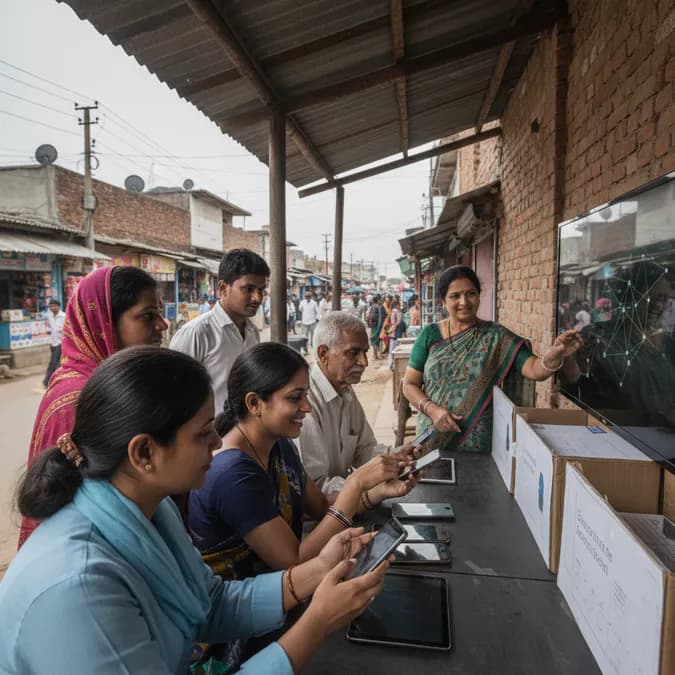
The digital divide refers to the gap between those who have easy access to digital technology and those who do not. This divide is particularly pronounced in developing countries, where economic constraints often limit access to essential devices like smartphones. In India, the digital divide is a pressing issue, with internet penetration increasing from just 14% in 2014 to an impressive 67% in 2024, translating to approximately 930 million users. However, the affordability of handsets remains a significant barrier to further inclusion.
Handset Affordability as a Barrier to Digital Inclusion
Handset affordability is identified as the primary obstacle to global digital inclusion. As Jyotiraditya Scindia stated, "Handset affordability remains the primary obstacle to global digital inclusion." The cost of smartphones can be prohibitive for many individuals, particularly in rural areas where incomes are lower. Without affordable devices, the benefits of digital connectivity cannot be fully realized.
- High costs of smartphones limit access to technology.
- Rural populations are disproportionately affected due to lower income levels.
- Access to affordable devices is crucial for educational and economic opportunities.
India's PLI Scheme: Policy Response
To address the issue of handset affordability, the Indian government has implemented the Production Linked Incentive (PLI) scheme. This initiative aims to boost local manufacturing of smartphones, thereby reducing costs and increasing accessibility for consumers. By incentivizing domestic production, India seeks to create a robust supply chain that can meet the demands of its vast population.
- The PLI scheme targets smartphone manufacturers to enhance local production.
- It aims to lower costs and promote digital inclusion.
- Encourages innovation and job creation in the tech sector.
5G Infrastructure Development in India
India has rapidly developed the world's second-largest 5G network infrastructure, which is crucial for enhancing connectivity and digital services. The rollout of 5G technology is expected to provide faster internet speeds and more reliable connections, further facilitating access to digital platforms. As of now, India boasts coverage in 99.9% of its districts, with approximately 40 crore users actively utilizing 5G services.
- India's 5G network is the second-largest globally.
- 99.9% district coverage enhances connectivity.
- 40 crore users benefit from faster internet speeds.
Projected Growth and Subscriber Targets
Looking ahead, India's 5G subscriber base is projected to reach one billion users. This ambitious target reflects the government's commitment to expanding digital access and ensuring that all citizens can benefit from advanced telecommunications technology. The rapid growth of the 5G network is expected to play a pivotal role in bridging the digital divide.
- Projected subscriber base of one billion by 2025.
- Continued investment in infrastructure and technology.
- Focus on rural connectivity to ensure equitable access.
Government's Role in Bridging the Gap
The Indian government plays a crucial role in bridging the digital divide through various initiatives. The BharatNet project, for instance, aims to connect over 250,000 gram panchayats with broadband services, enabling rural communities to access digital resources. Additionally, the government has significantly reduced data prices, with costs plummeting by 97% from Rs 290 to Rs 8 per GB. This dramatic reduction in data costs has empowered millions of users to access the internet.
- BharatNet connects rural areas to broadband services.
- Data prices have dropped significantly, enhancing affordability.
- Government initiatives align with the goals of Digital India.
Future Outlook and Challenges
As India continues to advance its digital infrastructure, the future looks promising. The government is also preparing for the next generation of connectivity with the Bharat 6G Alliance, which aims to position India as a leader in global 6G standards and applications. However, challenges remain, particularly in ensuring that all citizens can afford the necessary devices to access these advancements.
In conclusion, handset affordability is a critical factor in bridging the digital divide in India. Through initiatives like the PLI scheme and the rapid expansion of 5G infrastructure, the government is making strides toward achieving digital inclusion. However, continued efforts are necessary to ensure that all citizens, particularly those in rural areas, can access affordable devices and benefit from the digital economy.
Key Takeaways
- Handset affordability is essential for digital inclusion in India.
- Government initiatives like the PLI scheme aim to lower costs and boost local production.
- 5G infrastructure development is crucial for enhancing connectivity.
- Continued efforts are needed to ensure all citizens can access affordable devices.
FAQ
What is handset affordability?
Handset affordability refers to the economic accessibility of smartphones and other digital devices, which is crucial for digital inclusion.
Why is handset affordability important?
It is important because it enables individuals, especially in rural areas, to access digital technology and services, thereby promoting economic growth and educational opportunities.
What initiatives are being taken to improve handset affordability in India?
The Indian government has implemented the PLI scheme and is investing in 5G infrastructure to enhance local manufacturing and reduce costs.
Sources
- Automated Pipeline
- Views of Jyotiraditya M. Scindia: “Technology can bridge multiple divides in our country”
- Digital infra powering India's economic shift: Scindia
- India to lead global 6G standardisation, says Union Minister Jyotiraditya Scindia
- ITU-WTSA 2024 Concludes: India Leads the Charge for Digital Inclusion
- Source: punjabpage.com
- Source: telecomtalk.info
- Source: economictimes.com