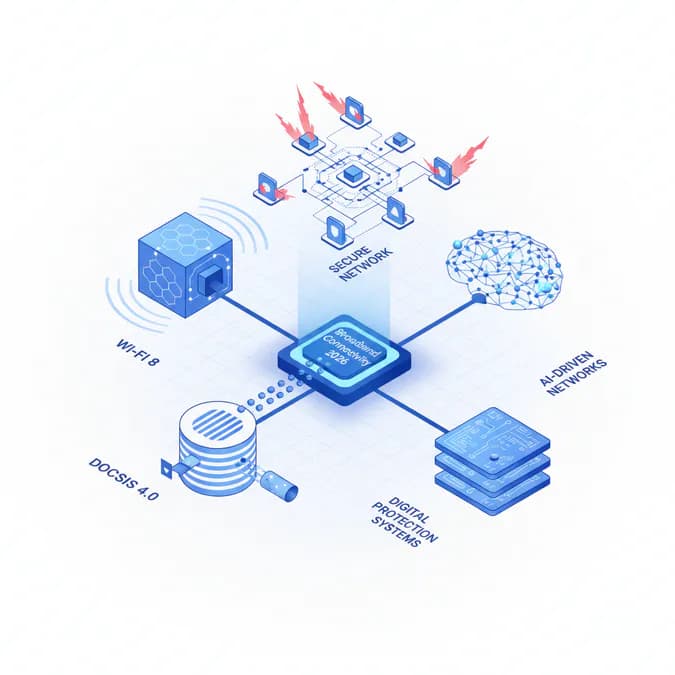
The broadband connectivity landscape in 2026 is being fundamentally reshaped by emerging technologies and a renewed focus on real-world performance. With advancements like Wi-Fi 8, DOCSIS 4.0, and AI-orchestrated infrastructure, the broadband connectivity industry is moving beyond headline speeds to prioritize low latency, reliability, and enhanced user experiences. This article delves into these key trends, exploring their implications for consumers and service providers alike.
The Evolution of Broadband Standards and Broadband Connectivity
The broadband connectivity industry is on the cusp of a significant transformation in 2026, driven by innovations in wireless and wired technologies. Historically, the focus has been on increasing headline speeds, but the industry is now shifting towards optimizing real-world performance and reducing latency. This evolution is marked by the development and deployment of technologies like
 ://www.wi-fi.org" target="_blank" rel="noopener">Wi-Fi Alliance Wi-Fi 8, the expansion of CableLabs DOCSIS 4.0, and the integration of AI-orchestrated infrastructure. According to NCTA, these advancements are collectively shaping the future of broadband connectivity, emphasizing user experience and application performance over raw bandwidth numbers.
Wi-Fi 8: Next-Generation Wireless Broadband Connectivity
Wi-Fi 8 (IEEE 802.11bn) represents a paradigm shift in wireless broadband connectivity. Unlike previous generations that primarily focused on increasing theoretical maximum speeds, Wi-Fi 8 prioritizes reliability, latency reduction, and real-world performance. While maintaining the same 23 Gbps maximum speed as Wi-Fi 7, Wi-Fi 8 introduces several key enhancements to improve the user experience and strengthen overall broadband connectivity infrastructure.
Key Features of Wi-Fi 8
- Enhanced Long Range (ELR): Extends the coverage area and improves signal strength, ensuring a more consistent broadband connectivity experience across larger spaces and through obstacles.
- Distributed-Tone Resource Unit (dRU): Optimizes resource allocation to reduce interference and improve network efficiency, directly enhancing broadband connectivity performance.
- Stricter Access Point Coordination: Minimizes latency spikes caused by interference and network congestion, ensuring a smoother and more responsive broadband connectivity connection.
Early Adoption and Market Availability
What's particularly noteworthy about Wi-Fi 8 is its accelerated timeline for broadband connectivity deployment. Retail products are expected to launch in summer 2026, well before the IEEE 802.11bn standard is finalized in September 2028. This is a significant departure from previous wireless generations, where there was typically a longer gap between standard finalization and product availability. Major chipset manufacturers like Broadcom, Qualcomm, and MediaTek have already launched Wi-Fi 8 ecosystem products and chips, signaling strong industry confidence in the draft specifications and the future of broadband connectivity.
DOCSIS 4.0: Cable Broadband Infrastructure Upgrade
While Wi-Fi 8 is transforming wireless broadband connectivity, DOCSIS 4.0 represents the next evolution in cable broadband infrastructure. DOCSIS 4.0 aims to deliver multi-gigabit speeds, improved latency, and enhanced security over existing cable networks. This upgrade is crucial for cable operators to maintain competitive broadband connectivity offerings in the face of increasing fiber deployments.
Key Features of DOCSIS 4.0
- Extended Spectrum DOCSIS (ESD): Increases the available spectrum for data transmission, enabling higher speeds and more robust broadband connectivity.
- Full Duplex DOCSIS (FDX): Allows simultaneous upstream and downstream data transmission on the same frequencies, improving network efficiency and broadband connectivity reliability.
- Improved Security: Incorporates advanced encryption and authentication mechanisms to protect against cyber threats and safeguard broadband connectivity infrastructure.
The deployment of DOCSIS 4.0 will enable cable operators to offer competitive broadband connectivity services, supporting bandwidth-intensive applications such as 4K/8K video streaming, online gaming, and virtual reality. More information about DOCSIS 4.0 technical specifications can be found on the CableLabs website.
AI-Orchestrated Networks: Intelligent Broadband Connectivity Management
Artificial intelligence (AI) is playing an increasingly important role in network management and optimization. AI-orchestrated networks leverage machine learning algorithms to analyze network traffic patterns, identify potential issues, and automatically adjust network parameters to improve broadband connectivity performance. This intelligent infrastructure management is becoming essential for delivering a consistent and reliable broadband connectivity experience.
Benefits of AI-Orchestrated Networks
- Improved Network Performance: AI algorithms can dynamically optimize network parameters to minimize latency, reduce packet loss, and improve overall throughput in broadband connectivity systems.
- Proactive Issue Detection: AI can identify potential broadband connectivity issues before they impact users, allowing service providers to take proactive measures to prevent outages.
- Automated Network Management: AI can automate many of the routine tasks associated with broadband connectivity management, freeing up human operators to focus on more strategic initiatives.
Industry experts note that AI-driven network orchestration is becoming a critical capability for broadband connectivity providers looking to deliver a superior customer experience. By leveraging AI, service providers can optimize their networks in real-time, ensuring that users always have the best possible broadband connectivity connection.
From Speed to Performance: Industry Paradigm Shift in Broadband Connectivity
The broadband connectivity industry is undergoing a fundamental shift in how it measures and delivers quality. Historically, the focus has been on headline speeds, with providers competing to offer the fastest download and upload rates. However, as applications become more demanding and users rely on their broadband connectivity connections for a wider range of activities, real-world performance has become increasingly important.
Key Performance Indicators (KPIs)
The industry is now focusing on KPIs that reflect the actual user experience in broadband connectivity:
- Latency: The time it takes for data to travel between two points on the network. Low latency is crucial for applications like online gaming, video conferencing, and virtual reality that depend on broadband connectivity.
- Reliability: The consistency and stability of the broadband connectivity connection. Users expect their broadband connectivity to be available when they need it, without interruptions or slowdowns.
- Jitter: The variation in latency over time. High jitter can cause audio and video distortion, negatively impacting the broadband connectivity user experience.
This shift from speed to performance is driven by the recognition that raw bandwidth is not the only factor determining the quality of broadband connectivity. By optimizing for latency, reliability, and jitter, service providers can deliver a superior user experience, even if their headline speeds are not the highest in the market.
Latency Optimization and Real-World Performance Metrics
Latency optimization is a key priority for broadband connectivity service providers in 2026. As applications become more interactive and real-time, low latency is essential for delivering a seamless broadband connectivity user experience. Several technologies and techniques are being used to reduce latency in broadband connectivity systems:
- Edge Computing: Moving processing and storage closer to the user to reduce the distance that data must travel, improving broadband connectivity responsiveness.
- Content Delivery Networks (CDNs): Caching content closer to the user to reduce latency when accessing popular websites and applications through broadband connectivity.
- Traffic Shaping: Prioritizing certain types of traffic to ensure that latency-sensitive applications receive the bandwidth they need for optimal broadband connectivity.
By implementing these strategies, service providers can significantly reduce latency and improve the performance of real-time applications. Research indicates that advanced connectivity systems like Qualcomm's FastConnect 8800 Mobile Connectivity System support 11.5 Gbps peak speeds and Bluetooth 7.0 with HDT technology, further enhancing broadband connectivity optimization capabilities.
Market Implications and Provider Adoption Timeline
The advancements in broadband connectivity technology have significant implications for the market and the adoption timelines of service providers. The early launch of Wi-Fi 8 products, even before the finalization of the standard, indicates a competitive drive among manufacturers to capture market share in the broadband connectivity sector. Industry leaders have noted that the market could see Wi-Fi 8 products as early as Summer 2026, marking a significant acceleration in broadband connectivity innovation.
For service providers, the adoption of DOCSIS 4.0 and AI-orchestrated networks will require significant investments in infrastructure and expertise. However, these investments are necessary to remain competitive and meet the evolving needs of customers seeking reliable broadband connectivity. The timeline for adoption will vary depending on the size and resources of the provider, as well as the specific market conditions and broadband connectivity demands in their service areas.
Key Takeaways
- Broadband connectivity in 2026 is shifting from headline speeds to real-world performance metrics including latency, reliability, and jitter.
- Wi-Fi 8 prioritizes reliability and latency reduction over speed increases, with retail products expected in summer 2026.
- DOCSIS 4.0 enables cable operators to deliver competitive multi-gigabit broadband connectivity services with improved security.
- AI-orchestrated networks provide intelligent, real-time optimization of broadband connectivity infrastructure.
- Edge computing, CDNs, and traffic shaping are essential techniques for reducing latency in broadband connectivity systems.
- Service providers must invest in new infrastructure and expertise to maintain competitive broadband connectivity offerings.
- The convergence of Wi-Fi 8, DOCSIS 4.0, and AI technologies will unlock new possibilities for bandwidth-intensive applications and superior user experiences.
Frequently Asked Questions
What is the main difference between Wi-Fi 8 and Wi-Fi 7 in terms of broadband connectivity?
While Wi-Fi 8 maintains the same 23 Gbps maximum speed as Wi-Fi 7, the key difference lies in its focus on real-world performance. Wi-Fi 8 prioritizes latency reduction, reliability, and consistency through features like Enhanced Long Range (ELR), Distributed-Tone Resource Units (dRU), and stricter access point coordination. These improvements make Wi-Fi 8 better suited for demanding broadband connectivity applications that require low latency and stable connections.
When will DOCSIS 4.0 broadband connectivity be available to consumers?
DOCSIS 4.0 deployment timelines vary by cable operator and market conditions. While the standard has been finalized, widespread adoption depends on infrastructure investments and customer demand. Service providers are gradually rolling out DOCSIS 4.0 capabilities, with larger operators typically leading the way in broadband connectivity upgrades.
How does AI improve broadband connectivity performance?
AI-orchestrated networks use machine learning algorithms to continuously analyze network traffic patterns and automatically optimize broadband connectivity parameters in real-time. This enables proactive issue detection, dynamic performance adjustment, and automated network management, resulting in more reliable and responsive broadband connectivity for end users.
What are the most important performance metrics for broadband connectivity in 2026?
The industry now emphasizes latency, reliability, and jitter as primary broadband connectivity performance indicators. Latency measures response time, reliability ensures consistent availability, and jitter measures latency variation. These metrics better reflect actual user experience than headline speeds alone.
How can I improve my broadband connectivity at home?
To optimize your broadband connectivity, consider upgrading to Wi-Fi 8 compatible devices when available, positioning your router centrally, minimizing interference from other devices, and ensuring your service plan supports your usage needs. Additionally, using wired connections for latency-sensitive applications can improve broadband connectivity performance.
Conclusion: The Future of Broadband Connectivity
The broadband connectivity landscape in 2026 is characterized by a fundamental shift towards real-world performance, low latency, and intelligent network management. Wi-Fi 8, DOCSIS 4.0, and AI-orchestrated networks are key enablers of this transformation, promising to deliver a superior user experience and unlock new possibilities for bandwidth-intensive applications. As the industry continues to evolve, service providers that prioritize performance and innovation in broadband connectivity will be best positioned to succeed in the future of broadband connectivity. The convergence of these technologies represents a pivotal moment where broadband connectivity becomes not just about speed, but about delivering reliable, responsive, and intelligent network experiences that meet the demands of modern digital life.
Sources
- NCTA - Broadband 2026: Emerging Trends in Networks and Connectivity
- CableLabs DOCSIS 4.0 Technical Specifications and Deployment Guide
- Gartner: AI-Driven Network Orchestration in Broadband Infrastructure
- Network World: Wi-Fi 8 in 2026 - Next-Gen Wireless Standard Prioritizes Reliability Over Speed Gains
- CE Pro: Wi-Fi 8 Is Here - What Happened to Wi-Fi 7?
- Thurrott: MWC 2026 - Qualcomm Announces First Wi-Fi 8 Chip and Prepares for 6G Launch in 2029
- Windows Central: Wi-Fi 8 Explained
- Bandwidth Place: Wi-Fi 8 Release Date, Features, Pros and Cons
- MediaTek: MediaTek Filogic 8000 Family Pioneers the Wi-Fi 8 Ecosystem at CES 2026
- Remio.ai: CES 2026 - Wi-Fi 8 Hardware Arrives Early with a Focus on Reliability
- OnOff: Wi-Fi 8 - Qualcomm Races Ahead of the Standard