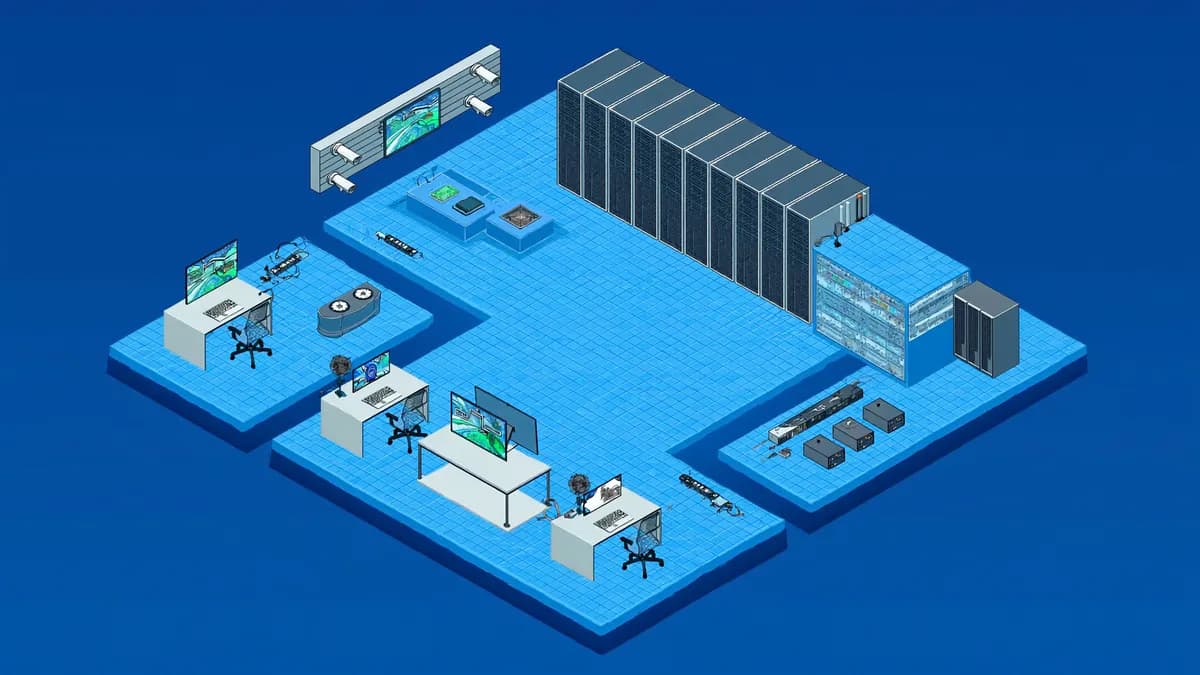
AT&T has unveiled an ambitious $250 billion infrastructure investment strategy designed to position the United States for the artificial intelligence era. This substantial commitment represents one of the largest telecom infrastructure investments in recent years and signals the company's determination to modernize networks across the country while preparing for emerging technologies that will define the next generation of connectivity.
The five-year investment plan addresses critical infrastructure gaps and positions AT&T to support the growing demands of AI applications, cloud computing, and data-intensive services that are reshaping how businesses and consumers interact with technology. This strategic initiative comes at a pivotal moment when network capacity and reliability have become essential competitive advantages in the digital economy.
Expanding the Workforce for Modern Networks

A cornerstone of AT&T's infrastructure investment strategy involves significant workforce expansion. The company plans to hire thousands of technicians and skilled workers to support the deployment and maintenance of upgraded network infrastructure. This hiring initiative addresses both immediate infrastructure needs and long-term operational requirements as networks become increasingly complex and technology-dependent.
The technician hiring program reflects AT&T's recognition that infrastructure modernization requires substantial human capital. These positions will span various specializations, including fiber optic installation, network maintenance, systems engineering, and field operations. By investing in workforce development, AT&T aims to create career opportunities while building the technical expertise necessary to manage next-generation networks.
Partnership with AST SpaceMobile for Remote Coverage
A particularly innovative aspect of AT&T's infrastructure plan involves a strategic partnership with AST SpaceMobile, a satellite communications company. This collaboration aims to extend reliable connectivity to remote and underserved areas where traditional terrestrial infrastructure deployment may be economically challenging or geographically difficult.
The satellite partnership represents a hybrid approach to network coverage, combining terrestrial infrastructure investments with space-based connectivity solutions. This strategy acknowledges that comprehensive national coverage requires multiple technological approaches. While fiber and cellular networks will continue to form the backbone of AT&T's infrastructure, satellite technology provides a complementary solution for reaching isolated communities and rural regions.
AST SpaceMobile's satellite constellation technology offers the potential to deliver broadband-quality connectivity to areas that have historically experienced limited service options. By partnering with this specialized provider, AT&T can leverage proven satellite technology while maintaining focus on its core terrestrial infrastructure modernization efforts.
Infrastructure Investment Priorities
The $250 billion investment encompasses multiple infrastructure categories essential for supporting AI-driven applications and services. These priorities include:
- Fiber Network Expansion: Substantial portions of the investment will support fiber optic network deployment and upgrades. Fiber infrastructure provides the high-capacity, low-latency connectivity that AI applications and cloud services require. Expanding fiber reach into underserved communities addresses both rural connectivity gaps and urban capacity needs.
- 5G and Beyond: Continued investment in 5G network deployment and early-stage 6G research ensures AT&T maintains technological leadership in wireless connectivity. These networks will support the massive data throughput demands of AI applications, autonomous systems, and real-time data processing.
- Network Modernization: Legacy infrastructure replacement and modernization efforts will improve network reliability, reduce operational costs, and enhance security. Upgrading aging infrastructure is essential for supporting the computational demands of artificial intelligence and machine learning applications.
- Data Center and Edge Computing: Supporting infrastructure for data centers and edge computing nodes enables the distributed processing architecture that AI applications increasingly require. These facilities reduce latency and improve performance for time-sensitive applications.
- Cybersecurity Infrastructure: As networks become more critical to economic activity, cybersecurity infrastructure investment protects against evolving threats. AI-powered security systems require robust underlying infrastructure to function effectively.
The AI Age and Network Requirements
AT&T's emphasis on preparing infrastructure for the AI age reflects fundamental changes in how networks must function. Artificial intelligence applications generate unprecedented data volumes and require consistent, reliable connectivity with minimal latency. Machine learning models deployed across distributed systems need robust network infrastructure to function effectively.
The shift toward AI-driven services creates new infrastructure demands that differ from previous technology transitions. Unlike earlier network upgrades that primarily addressed increased data volume, AI infrastructure requirements emphasize low latency, high reliability, and distributed processing capabilities. Networks must support real-time decision-making by AI systems while maintaining security and data integrity.
AT&T's infrastructure investment strategy directly addresses these emerging requirements. By modernizing networks now, the company positions itself to support AI applications that will drive economic growth and innovation across multiple industries.
Rural Connectivity and Equity Considerations
The partnership with AST SpaceMobile and the overall infrastructure investment strategy address persistent rural connectivity challenges. Rural areas have historically lagged in broadband access, creating digital divides that limit economic opportunity and access to essential services.
By combining terrestrial fiber expansion with satellite coverage, AT&T's plan offers pathways to improve rural connectivity. This multi-technology approach acknowledges that different geographic contexts require different solutions. Dense urban areas benefit from fiber and 5G infrastructure, while remote regions may rely more heavily on satellite and wireless technologies.
Improving rural connectivity has broader economic implications. Reliable broadband access enables remote work, supports agricultural technology adoption, facilitates telemedicine, and attracts business investment to underserved regions. Infrastructure investments that close rural connectivity gaps contribute to more equitable economic development across the country.
Competitive Positioning and Industry Implications
AT&T's substantial infrastructure investment reflects competitive dynamics within the telecommunications industry. As technology companies, cloud providers, and other industries increasingly depend on network infrastructure, telecom companies that invest in modernization gain competitive advantages.
The scale of AT&T's investment signals confidence in long-term demand for network services and positions the company as a leader in infrastructure modernization. This investment also demonstrates AT&T's commitment to supporting emerging technologies rather than simply reacting to market changes.
Other major telecom providers are likely to evaluate their own infrastructure investment strategies in response to AT&T's announcement. Industry-wide infrastructure modernization benefits consumers and businesses by improving service quality, expanding coverage, and supporting innovation.
Implementation Timeline and Execution Challenges
Executing a $250 billion infrastructure investment over five years requires sophisticated project management, supply chain coordination, and workforce development. AT&T will need to navigate various challenges including:
- Supply Chain Complexity: Sourcing equipment and materials for massive infrastructure projects requires managing complex global supply chains. Semiconductor shortages and other supply chain disruptions could impact implementation timelines.
- Regulatory Navigation: Infrastructure deployment often requires navigating local, state, and federal regulations. Permitting processes, environmental reviews, and utility coordination add complexity to project execution.
- Workforce Development: Hiring and training thousands of technicians requires substantial recruitment and training efforts. Competition for skilled workers in the technology sector may create recruitment challenges.
- Technological Evolution: Infrastructure investments must account for technological changes that may occur during the five-year implementation period. Flexibility in planning allows for adaptation to emerging technologies and standards.
Key Takeaways
AT&T's $250 billion infrastructure investment represents a major commitment to modernizing U.S. telecom infrastructure for the artificial intelligence era. The plan combines terrestrial fiber and wireless network expansion with satellite partnerships to extend coverage to remote areas. Significant workforce expansion will support infrastructure deployment and maintenance, while the overall strategy positions AT&T to support AI applications and emerging technologies that will define the next generation of connectivity. This investment has implications for rural connectivity, competitive positioning within the telecom industry, and the broader digital economy.
Frequently Asked Questions (FAQ)
What is AT&T's infrastructure investment focused on?
AT&T's infrastructure investment focuses on modernizing telecom networks to support AI applications, enhance connectivity, and expand coverage to underserved areas.
How will AT&T's investment impact rural connectivity?
The investment aims to improve rural connectivity by combining fiber expansion with satellite coverage, addressing digital divides in underserved regions.
What are the key priorities of AT&T's infrastructure investment?
Key priorities include fiber network expansion, 5G and beyond, network modernization, data center support, and cybersecurity infrastructure.
Table of Contents
- Expanding the Workforce for Modern Networks
- Partnership with AST SpaceMobile for Remote Coverage
- Infrastructure Investment Priorities
- The AI Age and Network Requirements
- Rural Connectivity and Equity Considerations
- Competitive Positioning and Industry Implications
- Implementation Timeline and Execution Challenges
- Key Takeaways
- Frequently Asked Questions (FAQ)